
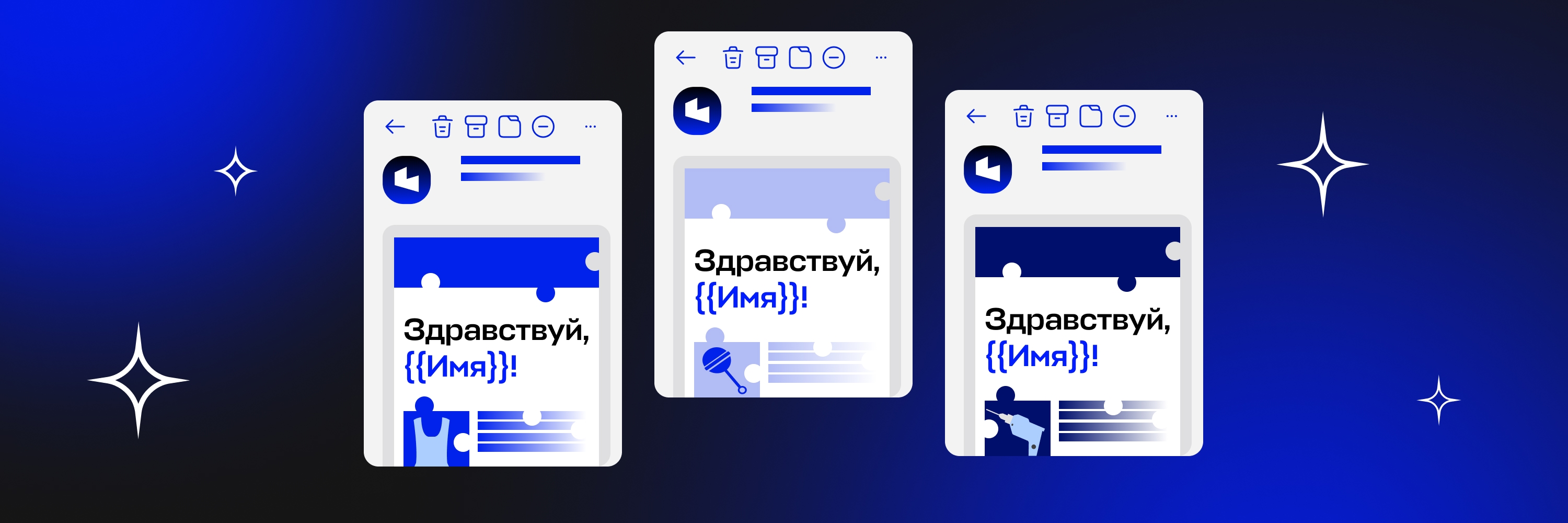

Every email marketer wants their emails to hit the mark. Segmented newsletters help with that — a format where the target audience is split into groups based on specific criteria, and the content and design of emails for each group are built around their particular traits. Emails like this perform noticeably better, because you're giving every customer what they like and speaking their language.
Let's break down what you need to know about segmentation, what to keep in mind when building a template, and how emails for different segments differ within a single brand's communications.
Why segmenting your database is the foundation
Study your audience closely, and it becomes clear just how varied and diverse it really is. Yes, your potential customers share one undeniable trait: they're all interested in your product to some degree. But that's pretty much where the similarities end.
Every subscriber's level of interest and awareness will be different, not to mention a hundred other distinctions: age and gender, location and lifestyle, life experience and shopping habits. The customer journey and how they behave across the brand's channels matter too.
Audience segmentation in CRM has come a long way recently, and it's no longer just about sorting people by age and gender.

Here's what comprehensive segmentation can help with:
- Personalizing newsletters. Personalization is one of the biggest trends in email communication right now. A message that feels like it was written just for the reader gets a far stronger response than a flood of generic promotional content — something we're all thoroughly tired of.
- Increasing the relevance of messages. Segmentation improves subscriber engagement, since emails match their expectations and interests. In terms of content, they'll deliver the information that matters to customers in that particular group. And in terms of form, they'll stay within a carefully tuned stylistic range — if you work out the tone-of-voice nuances for each segment.
For example, youth slang will only reach the people who understand it (and actually want to be talked to that way), while none of the "cringe," "crushes," or wild creative flourishes will faze the more conservative older generation.
- Boosting metrics. Segmented newsletters help improve metrics like conversion, open rate, click-through rate, and more, while lowering the unsubscribe rate: the more relevant an email is, the more useful it is to the reader. Emails like that are ones people actually want to open and read.
- Saving budget on sending emails. Proper segmentation helps you use your advertising resources more efficiently and avoid wasted spend. Send only the newsletters that boost sales and pay for themselves, confident that each message will reach the right recipient.
- Avoiding the spam folder. When a newsletter matches the customer's interests, spam complaints become far less common.
According to Mailmodo's guide "What You Need to Know About Email Segmentation Statistics in 2024," segmentation is 51% effective — one of the strongest and easiest-to-implement tools in email marketing. Yet only 31% of companies use even basic segmentation. |
|---|
How to segment: key principles
Your customers differ from one another across dozens of criteria. So how do you organize and structure all that information? Use a few key principles.
1. Demographic. This includes basic indicators: gender, age, education, social status, occupation, income level, whether someone has children. There's also the concept of "life stage" — a given stage, like becoming a parent, can happen at very different ages, so simply going by date of birth isn't enough.
Be prepared: you'll need a fairly large amount of customer personal data, which means collecting it and processing the analytics beforehand.

2. Geographic. This principle covers everything related to a customer's location and the geolocation of the devices they use to read email — the classic parameters being city, region, country, with segments divided accordingly. Language and climate specifics fit here too, and sometimes matter as well.
3. Behavioral. This accounts for every aspect of a user's behavior and activity when interacting with the brand and product — the customer journey history, expected benefits, and preferences. RFM segmentation, based on recency, frequency, and monetary value of purchases, plays a key role here.
The behavioral principle lets you carve out segments like "new subscribers," "regular customers," "spent a certain amount," "dormant," and so on.
4. Psychographic. Psychographics is used in marketing to build a precise audience profile by digging into their values, interests, needs, and lifestyle. What matters to your business's customer, what do they value, and how does that show up in how they live? The answers reveal exactly what place your brand and its offers hold in the customer's life.
Example: Imagine you run a food delivery company and have split your customer base into segments by personality type. Extroverts and introverts will respond to different messaging. The ideal key visual for introverts is someone happily enjoying a great meal alone, without leaving home.
Every approach involves dividing the audience into specific groups. Combine these principles with one another to define clearly outlined, active segments that account for several factors at once.
As a starting point, you can automatically split your whole database along demographic lines — by gender and age group. Splitting by gender also comes in handy for sending subscribers greeting emails tied to gender-specific holidays.
According to Backlinko's research "60 Key Email Marketing Statistics" (2024), 53% of consumers enjoy emails that mention important dates. |
|---|

The next task after that initial basic split is getting more specific. Give it a little more work, and the monolithic mass of "new subscribers" starts speaking in different voices. There are men and women of different ages here, with different profiles, different interests, and different lifestyles. It matters to find the right approach for each micro-group and send them the "right" email.
Which specific segmentation principles should you consider, and how do you combine them correctly when launching an email campaign? This is where analyzing your product's characteristics and your target audience comes in handy.
For example, the geographic principle doesn't matter much if you're sending a newsletter about handmade craft fairs happening in a specific region. But what kind of people might come to you, and what ethics and aesthetics draw them in — that's worth a closer look.
How segmentation helps personalize emails
Once your contact database is segmented, the next step is figuring out how to differentiate the copy and design of your emails across different groups within your audience. There are two main paths:
- offer each segment a unique newsletter with relevant information;
- or prepare a single email template where the content changes dynamically.
A tool that helps change the content of emails is dynamic content. It's a magic solution: with it, an email template transforms and fills in differently for different categories of users.
62% of online store merchants use dynamic content to personalize their email campaigns (according to Backlinko's "60 Key Email Marketing Statistics," 2024). |
|---|
The classic example of dynamic content is addressing someone by name, inserted automatically. At the stage of writing the copy for an email or template, this usually looks like the dynamic element wrapped in curly braces:
Hello, {{Name}}!
Don't underestimate this way of addressing your subscribers — a small detail like this moves things toward something that feels like a personal exchange from the very start, full of meaning and emotion, like real communication. And all of it happens automatically: the newsletter algorithm pulls the right parameters from the database.
You can include a subscriber's name not just in the greeting but right in the subject line too — it boosts the chances the email gets opened.

Set up dynamic content to pull into your emails not just static demographic data from your customer database, but also various behavioral data points that keep changing. This is exactly the mechanism behind the well-known "Abandoned Cart" trigger email. Here's how it works technically:
- The email service receives data about user actions from the website via an API;
- The service generates a personalized email based on a set algorithm.
Dynamic blocks can include not just text, but also images, CTA buttons, links, and other elements.
Examples of email templates for newsletter segmentation
Let's look at examples of how different principles for segmenting email newsletters play out in practice.
1. In this newsletter for the Sportmaster store, made by the Mailfit agency, segmentation is done by territory. The same process happened in several cities — departments moving from one store in the chain to another — but branch addresses, product category lists, and other parameters differ.

Emails for the different city segments were built on a single template. The variable values were entered manually — there was no need to resort to dynamic content.2. In the next newsletter from the same brand, segmentation gets more complex — it's based entirely on behavior. Subscribers made purchases and earned bonus points that now work as discounts. Depending on how many purchases they made, the brand rewarded customers with different amounts of bonus points — 4,000, 8,000, or 12,000.

In cases like this, differentiation happens through automatic processing of data on each user's actions. As a result, every participant in the promotion receives exact information about their account balance — plus a dose of inspiration for new purchases.
As you can see, there's very little changing content in these emails — just the bonus point total. You can choose to pull the number in with a formula, or enter it manually by creating three emails based on one template.
Let's sum up: working on a segmented email newsletter always happens along two parallel tracks. Some things get built into the algorithm, and some get changed in emails by hand. It's important to strike the right balance here and figure out how best to automate campaign work — saving time on creating emails while still being confident in the result.
With Letteros, you can order the development of a responsive, on-brand template and then apply segmentation principles to it. That way, you can repeatedly get a large set of beautiful, engaging, high-converting emails that speak to every segment of your audience.