
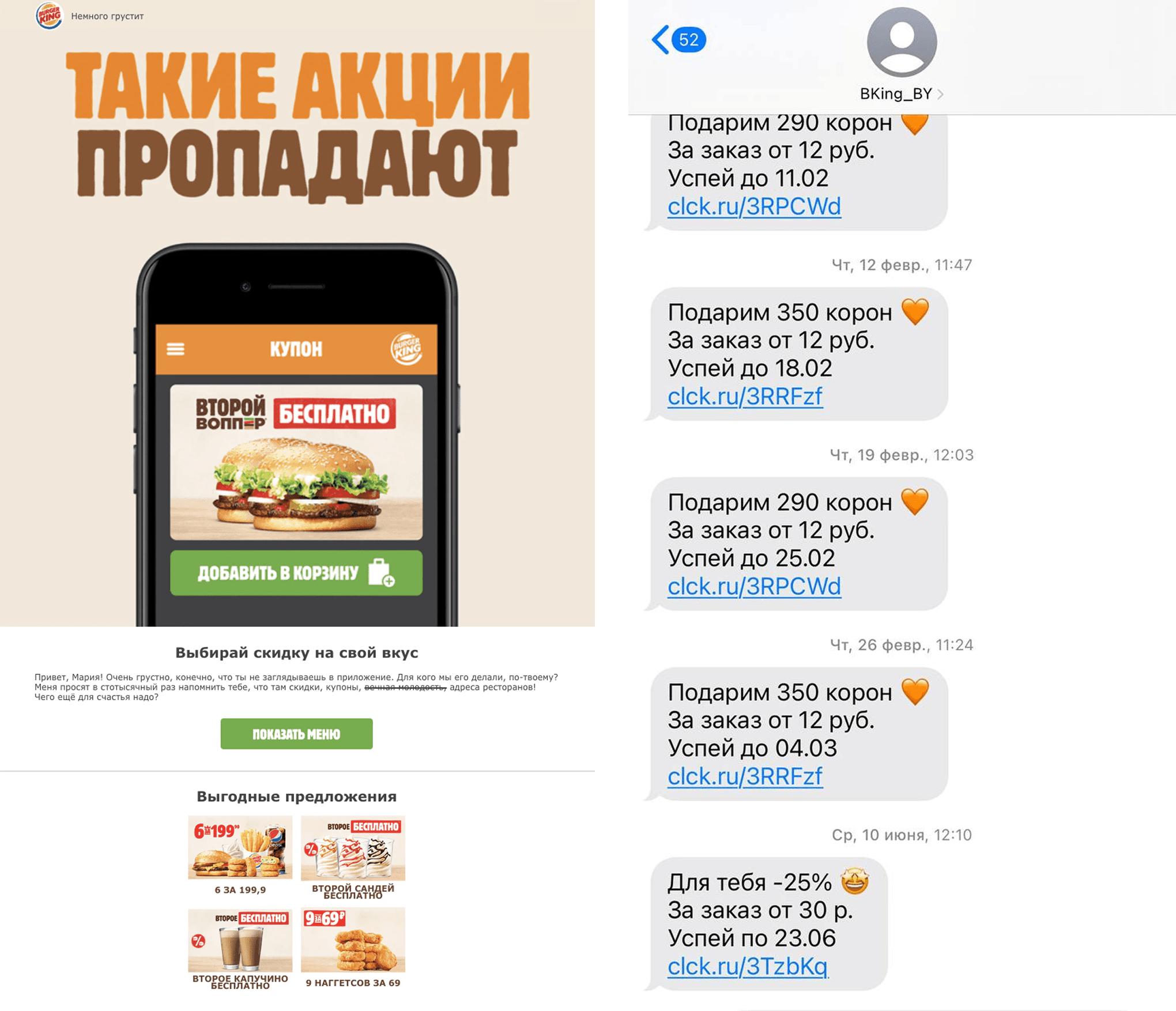
Email rarely works in isolation. A subscriber sees an ad on social media, reads a push notification, gets a text, and only then opens an email. Or the other way around. Let's look at how email interacts with other channels, and how to structure communication so channels reinforce each other instead of duplicating one another.
How email differs from other channels
Before comparing channels, it's worth understanding where email's real strength lies.
Audience ownership. An email list belongs to the company. VKontakte's or Telegram's algorithms can change your reach at any moment — your subscriber list stays yours no matter what.
Content depth. An email lets you convey more information than a social media post or a push notification. Long instructions, case studies, curated roundups — all of it works better in email.
Personalization. Email lets you segment your audience and send different content to different people. No other channel offers this level of precision at a comparable cost.
Measurability. Open Rate, Click Rate, conversions — email gives you detailed analytics for every email and every segment.
That said, email has its limits. Emails might not get opened. Deliverability depends on domain reputation. For urgent messages, email works worse than push or SMS.
Email and SMS
SMS and email solve different problems and complement each other well.
SMS gets read fast — open rates for short messages exceed 90%. It's a channel for urgent, short messages: a verification code, an appointment reminder, an order shipping notification.
Email is suited to anything that needs context and detail: instructions, promotions with terms and conditions, content newsletters.
A typical combo: an SMS reminder about an abandoned cart paired with a detailed email about the products. Or an SMS with a discount code paired with an email featuring the full catalog of items on sale.
The main rule: don't send the same message through both channels on the same day. It's annoying and drives up unsubscribes.

Email and push notifications
Push notifications are the fastest channel. They appear on screen instantly and demand a reaction right then and there. Push open rates are high, but audiences quickly get tired of frequent notifications and turn them off.
Email operates on different logic: people open their inbox when they're ready to. It's slower, but the content has a longer shelf life.
A good combo: a push announcing a promotion paired with an email covering the full terms and a curated product selection. The push creates the first touchpoint, the email closes the sale.
For trigger scenarios — an abandoned cart, a reminder about an expiring discount — push and email can be set up in a single sequence with different intervals: a push after an hour, an email after a day if the first touchpoint didn't land.
Email and Telegram
In recent years, Telegram has become a serious competitor to email in the CIS market. Channels and bots offer high reach, fast delivery, and room for interactivity.
But Telegram has limitations email doesn't. Algorithms can change your content's visibility. A channel's audience doesn't belong to the company — if the channel gets blocked or shut down, that audience is gone. Personalization in Telegram channels is minimal.
Email and Telegram work well together. Telegram is for timely content, short news items, quick announcements. Email is for in-depth content, personalized offers, and segmented sequences.
A popular mechanic: announcing in a Telegram channel that subscribing to the email newsletter unlocks exclusive materials. This converts a Telegram audience into an email list the company owns directly.

Yandex Practicum announces a webinar on Telegram and sends subscribers to email for the link — two channels handling different jobs within one scenario.
Email and social media
VKontakte, Instagram, YouTube — each of these platforms runs on its own algorithm. Organic reach is unstable, and paid promotion keeps getting more expensive.
Email and social media handle different jobs in the funnel. Social media drives acquisition and brand awareness. Email retains an audience that already knows the company and converts them into purchases.
Two effective combos.
From social media to email. A lead magnet in a post or an ad — a discount, a guide, a checklist — in exchange for an email address. This way, social media followers end up on a list the company owns independently of any algorithm.
From email to social media. An email inviting people to join a private VKontakte community or subscribe to a channel. Email subscribers are loyal and readily move into a brand's other channels.

The footer of a Letteros email with links to VKontakte and Telegram — a simple way to move your email audience into the brand's other channels.
Email and paid search/display advertising
Combining email with retargeting is one of the most effective tools in e-commerce.
Upload your email list into the VKontakte or Yandex Direct ad platforms and set up ads targeting people who received an email but didn't open it — or the reverse, people who opened the email but didn't take the target action.
Retargeting like this is more precise than regular interest-based advertising, because the audience is already familiar with the brand.
Another scenario: exclude people who already bought through email from your ad targeting. This lowers your ad spend and avoids annoying customers with offers to buy something they already have.
How to build an omnichannel strategy
Omnichannel isn't just about being present on every channel. It's coordinated communication where each channel plays its own role without contradicting the others.
A few principles that help you build the system.
Define each channel's role. Email for in-depth content and personalization. Telegram for timely news. SMS for urgent notifications. Push for quick touchpoints. Ads for acquiring new audiences.
Don't duplicate content. The same message across multiple channels on the same day is annoying. Either spread it out over time or adapt it to each channel's format.
Maintain a single communication history. A customer who just contacted support shouldn't get a promotional email the same day. Syncing data across channels is the foundation of a good customer experience.
Use channels sequentially. A sequence of "ad → push → email → retargeting" works better than any single channel on its own. Each subsequent touchpoint reinforces the one before it.
Summary
Email works best not as a standalone tool but as part of a system. It holds the list you own, gives you content depth and precise personalization. Combined with Telegram, SMS, push, and ads, email becomes the center of a communication strategy — the channel where audience loyalty accumulates and gets monetized.
Also read: