
The hospitality industry (HoReCa) has unique specifics when it comes to email marketing. Here, the customer isn't just buying a product — they're buying emotions, anticipation of a getaway, and a level of comfort. At the same time, the decision cycle can last anywhere from a few days to several months, and the competition for attention in the user's inbox is fierce.
In this article, we'll break down how hotels, resorts, and travel aggregators can build an effective newsletter system — from the welcome email to repeat-purchase triggers.
The specifics of email communication in HoReCa
- Emotional, powerful visuals. An email should instantly transport the reader into a vacation mood. In the hospitality space, text without high-quality photos of rooms, views, or amenities simply doesn't work.
- High-value triggers. Transactional and triggered emails (booking confirmation, welcome, pre-arrival reminder) have an Open Rate above 60–70%. This is prime real estate for cross-selling.
- A pressing need for segmentation. A family with kids, a business traveler, and a young couple are three completely different audiences. Sending them the same promo codes is ineffective.
Key email scenarios and implementation examples
1. Welcome sequence and double opt-in confirmation
The first touchpoint sets the tone for all future communication. The confirmation email should be concise while still conveying a sense of premium quality and care for the guest. It's important not just to ask for email confirmation, but also to remind the user what perks they'll get.

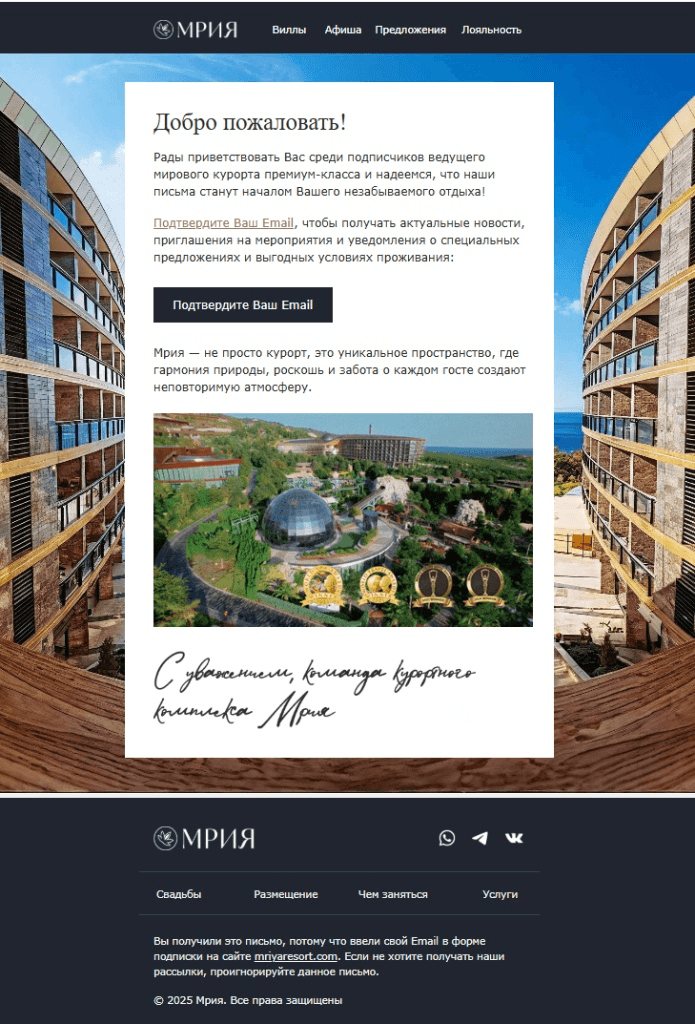
Take a look at the structure of Mriya Resort's welcome email. A large premium headline, a clear CTA button for email confirmation, a tasteful image block showcasing the hotel's awards, and a warm team signature in the footer. This is a classic example of creating a "five-star" feel before the guest has even checked in.
2. Driving loyalty program sign-ups
Your email list should work for retention. Encourage users to sign up within your internal ecosystem. The best trigger for this is instant value — for example, welcome points added to their account that can be spent on a booking.

The AZIMUT Hotels chain uses an instant-value mechanic: confirming participation earns 500 points. The email body clearly lays out the loyalty program's benefits with icons (discounts, status upgrades, accumulating nights). The email is concise, uses brand colors, and reads perfectly in 3 seconds.
3. "Abandoned browse" mechanics and destination roundups
If a user searched for accommodation or tickets on your site but left without booking, send a dynamic trigger email. This also includes regular promo roundups of top destinations from the customer's departure city.

Aviasales does an excellent job with geo-based personalization. The email automatically detects the departure city (Moscow) and offers a clean price grid for popular destinations (Sochi, Kaliningrad, Istanbul). Bright orange "Learn more" buttons lead straight to the search results.
This sequence can also include content-driven nurture emails that explain the value of the site's internal tools to the user (for example, the "Favorites" feature or price tracking).

Instead of an aggressive sales pitch, the service uses infographics and numbers ("2.5 million people have already saved"), gently explaining why users should add tickets to favorites. This approach grows the retention metric.
4. Content roundups and segmented special offers
Help customers plan their vacation. Split your newsletters by type of getaway: train trips to the seaside, weekend tours, or international destinations.

An example from Yandex Travel shows how to segment an audience that prefers trains to planes. A themed banner ("A seaside getaway") along with a roundup of tickets to Sochi and Novorossiysk showing the minimum price.
If you're selling specific hotels, make sure to include social proof in the template — star ratings and review counts. This addresses travelers' main fears.

In this email about Turkey, the brand uses several powerful mechanics at once: large discount promo codes to drive quick conversion, and cards for specific hotels with star ratings (4.6 and 4.7) based on hundreds of real guest reviews.
5. Seasonal reactivation promo code (a burnout-fighting mechanic)
When audience engagement drops, use situational marketing. Play on the theme of work fatigue and deadlines, and position the email as "therapy."

Fun, relatable copy ("Rescuing you from work," "A reason to think about a trip") paired with a bold promo code badge (NETSIL-3K, NAVSE) is a great way to win back "dormant" users who haven't made a booking in a while.
Checklist: what to check in your hotel's newsletters right now
- Template responsiveness: Over 70% of travel emails are opened on smartphones. Hotel cards and booking buttons must not break on mobile screens.
- Cancellation automation: If a guest cancels a booking, or conversely has already paid for it, they should be instantly excluded from the "Still choosing a hotel?" marketing sequence.
- End-to-end analytics: Check whether your email platform is integrated with your PMS (property management system) so you can track the real ROI of your emails.
Summary
Email marketing in the hospitality industry is a long-term conversation. By using welcome sequences to introduce the brand, loyalty programs for retention, and well-timed personalized promo codes, a hotel can significantly reduce its dependence on third-party aggregators and increase the number of direct bookings. Modern automation platforms like Letteros make it easy to build responsive emails with dynamic hotel cards and set up complex triggered scenarios for any of your business needs.
🚀 Want to automate your triggers and grow your hotel's direct bookings?