
Generic emails aimed at an entire customer base are increasingly ending up in spam and driving up unsubscribe rates. That's why brands are actively adding personalization to their emails — it engages users and makes them more loyal to the brand.
Email personalization means creating individual emails or email sequences tailored to a specific segment of your target audience or to each individual subscriber.
It's not "Hello, dear subscriber!" but "Hello, Catherine!" It's not sending "Happy International Women's Day" to your entire customer base, men and women alike, but targeting it only to the female half of your audience. This approach makes users feel like the email was created just for them and shows that you care.
How to personalize emails
- Prepare emails for each audience segment. To do this, split your customer base into groups based on specific criteria and send different content to each group.
For example
Send users who haven't made a purchase from you in a while a personal discount promo code.
Remind subscribers who added items to their cart but never checked out with an email nudge.
- Use the customer's personal data: name, gender, city, and date of birth. Always address subscribers by name and take gender into account — don't write "Dear Sir/Madam," personalize it for each gender. If you operate in several cities and a promotion is running in only one of them, tell only residents of that city about it. Writing to a subscriber in Moscow about a promotion in Kazan just feels odd.
- Take the user's interests into account. If someone regularly shows interest in one product category or always listens to the same music genre, create an email with a curated selection based on their preferences.
Great examples of email personalization
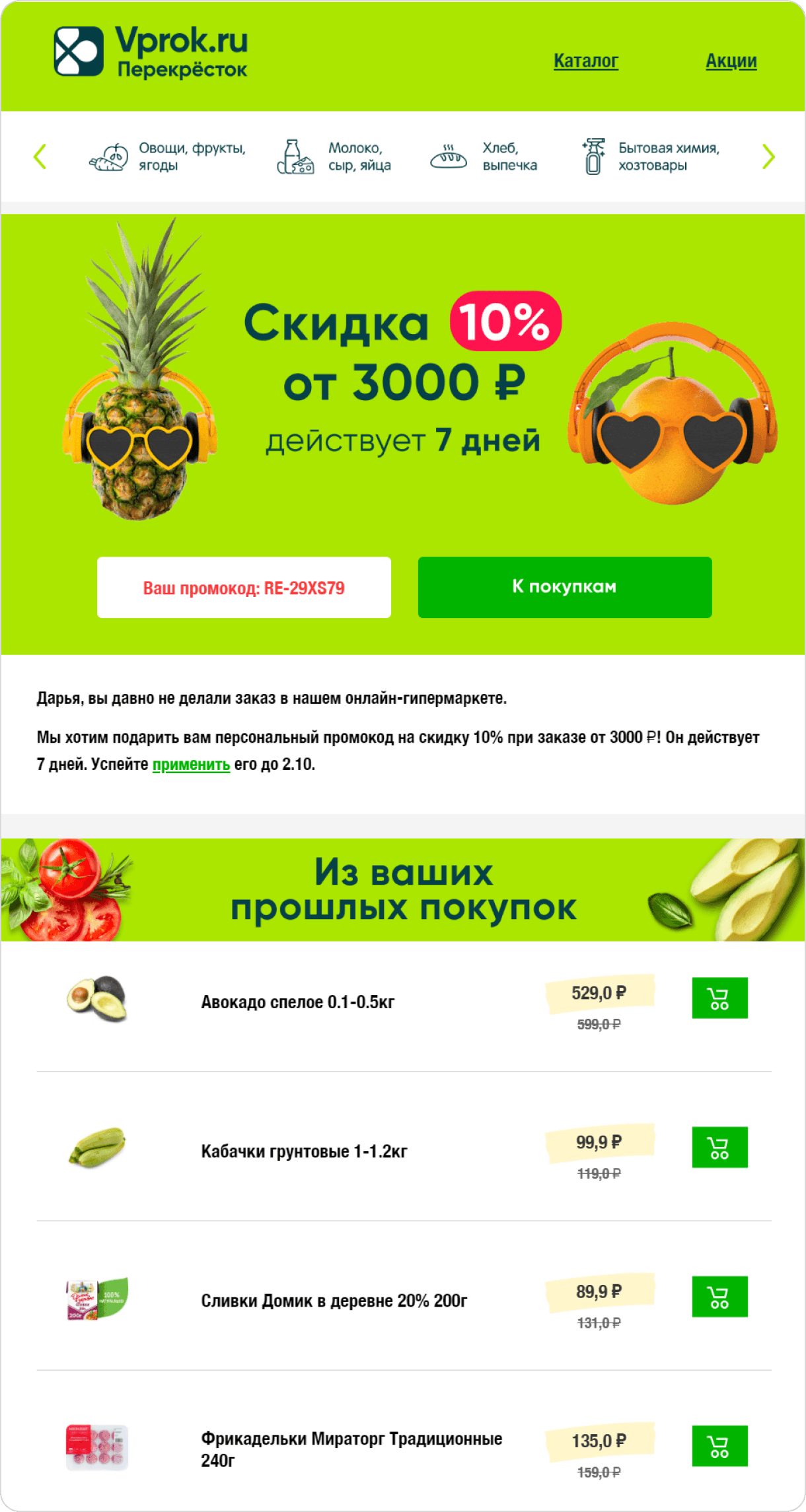
A great email from "Perekrestok", which includes the recipient's name and accounts for their preferred way of shopping (online) and order frequency.

The footwear company Monro reminds customers that their bonus points are about to expire and that they can be put toward a great deal instead of going to waste. The brand also states which items can't be paid for with bonus points and suggests picking something from popular categories.

Here's how the reminder about expiring bonus points looks from the restaurant "JohnJolie" — which also motivates customers to place an order with a nice bonus: a gift of 100 points.

Not-so-great examples of email personalization
The brand addresses the recipient by last name and first name, with the last name coming first. Nobody talks like that in real life, so the personalization looks like a script just inserted the user's full name. It ends up feeling lifeless.

Another example of what not to do — the brand PINKO.

A non-adapted, gray-looking email, the name written in Latin script, and no "Unsubscribe" button. On top of that, the company asks the user to share their experience in the very first email, even though there hasn't been one yet — the potential customer only signed up to get a promo code for their first order.
Why you should use personalization in your emails: the key takeaway
It boosts sales and customer loyalty. Studies show that open rates for personalized emails are 29% higher than for generic ones, while click-through rates are 41% higher. That means the chance a subscriber will read your offer and make a purchase is much higher too. And it also shows them that you care.